


 English
 русский
 Español
 عربى


Metal stamping is the process of placing flat sheet metal—either in blank or coil form—into a stamping press, where a tool and die surface ...
READ MORE

News
Home / News / Industry News / How Do I Find a Reputable Metal Fabricator? A Practical Guide for Buyers
How Do I Find a Reputable Metal Fabricator? A Practical Guide for Buyers
2026-09-28
If you have ever asked yourself, “How do I find a reputable metal fabricator?” you are not alone. As a manufacturer with more than 20 years of experience in metal stamping, bending, and deep drawing, we have worked with hundreds of buyers who needed reliable parts without the guesswork. Finding a trustworthy partner is not just about comparing prices; it is about verifying that a shop has the skills, processes, and commitment to deliver consistent quality. In this guide, we will walk you through the key factors we believe every buyer should evaluate before placing an order.
Start With Certifications and Quality Management Systems
A reputable metal fabricator should be able to show more than just a business license. Third-party certifications such as ISO 9001 demonstrate that the company follows documented procedures for quality management. Depending on your industry, you may also look for specific standards such as IATF 16949 for automotive parts, or AS9100 for aerospace components. Do not be afraid to ask for copies of certificates and confirm that they are current. Certifications are not just wall decorations; they indicate that the company is disciplined about traceability, corrective actions, and continuous improvement.
However, remember that a small fabricator with excellent internal quality systems may not hold formal certifications if they mainly serve domestic clients. In that case, ask about their inspection processes, defect rates, and how they handle non-conforming parts. The important thing is to see a clear commitment to quality management, whether through certification or equivalent internal practices.
Look for Relevant Industry Experience
Metal fabrication is not a one-size-fits-all service. A fabricator that makes simple brackets may not be the right choice for complex deep-drawn enclosures or automotive safety components. Look for a supplier with proven experience in your specific industry and product type. Ask for examples of similar parts they have produced, and check whether they understand the tolerances, materials, and surface finish requirements that matter to your application.
For instance, our team regularly produces stamped sheet metal parts for automotive applications, where consistency and material traceability are critical. We also manufacture deep-drawn containers and kitchen appliance accessories, which require precise tooling and careful process control. When you see a fabricator that has invested in tooling for your kind of product, it is a strong signal that they can handle your project.
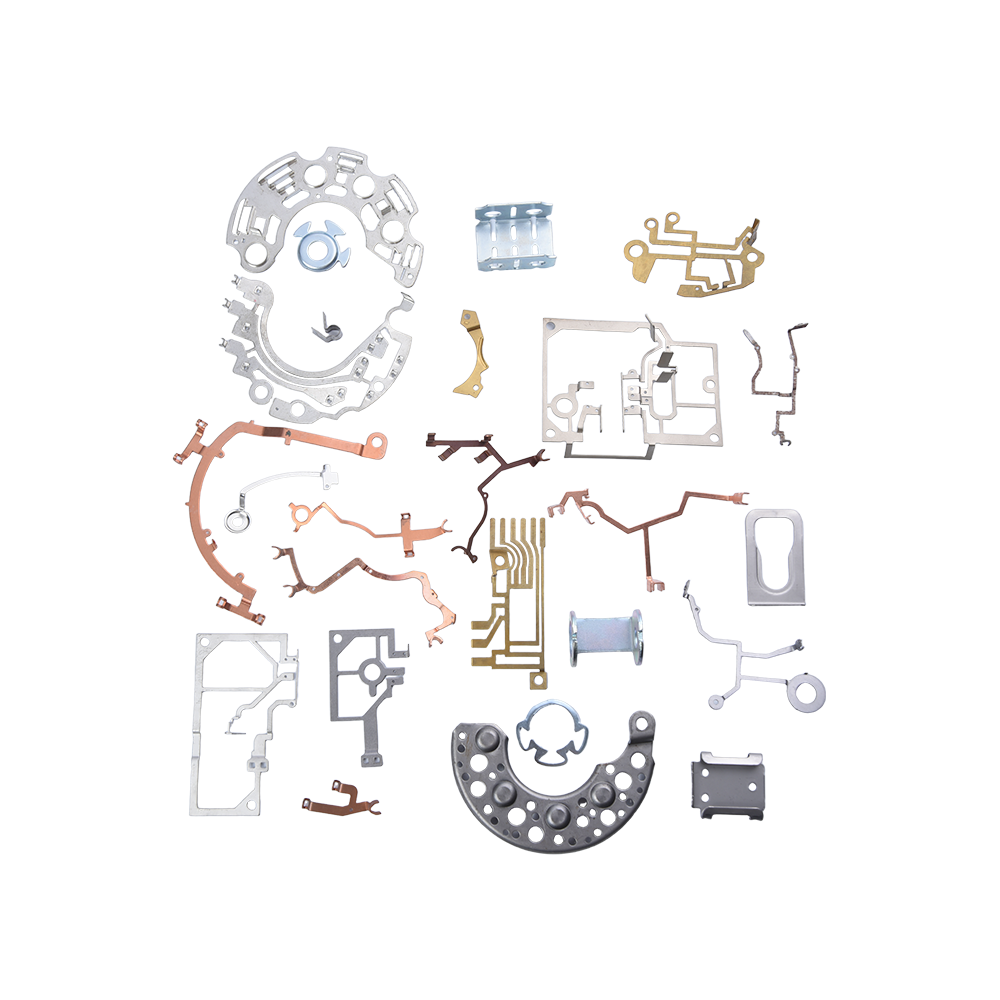 Stamped sheet metal parts for automotiveOur Stamped Sheet Metal Parts for Automotive are manufactured using precision stamping technology, ensuring high durability, corrosion resistance, and mechanical stren...View Product →
Do not hesitate to request references or case studies. A reputable fabricator will be happy to share examples of previous work, within confidentiality limits. Industry experience is not just about years in operation; it is about solving problems similar to yours.
Assess Production Capabilities and Equipment
Another fundamental question is whether the fabricator has the right equipment and capacity for your order. Ask about the types of presses, bending machines, and finishing lines they operate. For deep-drawn parts, for example, you need a fabricator with sufficient press tonnage and experience in tool design. For high-volume stamped parts, automation and progressive dies may be important. If you are not familiar with the terminology, you can read our overview of stamped parts types, materials, and applications to understand the basics.
If your project involves tight tolerances or complex geometries, ask about their toolroom capabilities and whether they make their own dies in-house. This can significantly reduce lead times and improve communication during the tooling development phase. A fabricator with in-house tooling and prototyping can also help you refine your design for manufacturability.
 Deep-drawn square container with cutoutsThis deep-drawn square container with cutouts utilizes advanced deep-drawing technology to create a seamless, one-piece design without any weld joints. This manufactur...View Product →
Also, consider production capacity. Will the fabricator be able to scale from prototype to mass production without losing quality? Ask about their monthly output, machine utilization, and backup plans for equipment maintenance. A reliable fabricator will give you honest lead times and flag potential bottlenecks before you commit.
Check Quality Control and Inspection Processes
Quality control is the backbone of a reputable metal fabricator. Ask for a detailed description of their inspection process, from incoming raw material checks to final packaging verification. Do they use coordinate measuring machines (CMM) for dimensional inspection? Do they perform first-article inspection on every new tool? How do they document results?
In consumer products such as kitchen appliance accessories, even small surface defects can lead to customer complaints. A good fabricator will pay attention to edge burrs, surface finish, and dimensional consistency. For example, our air fryer baking trays require careful control of hole patterns and coating adhesion.
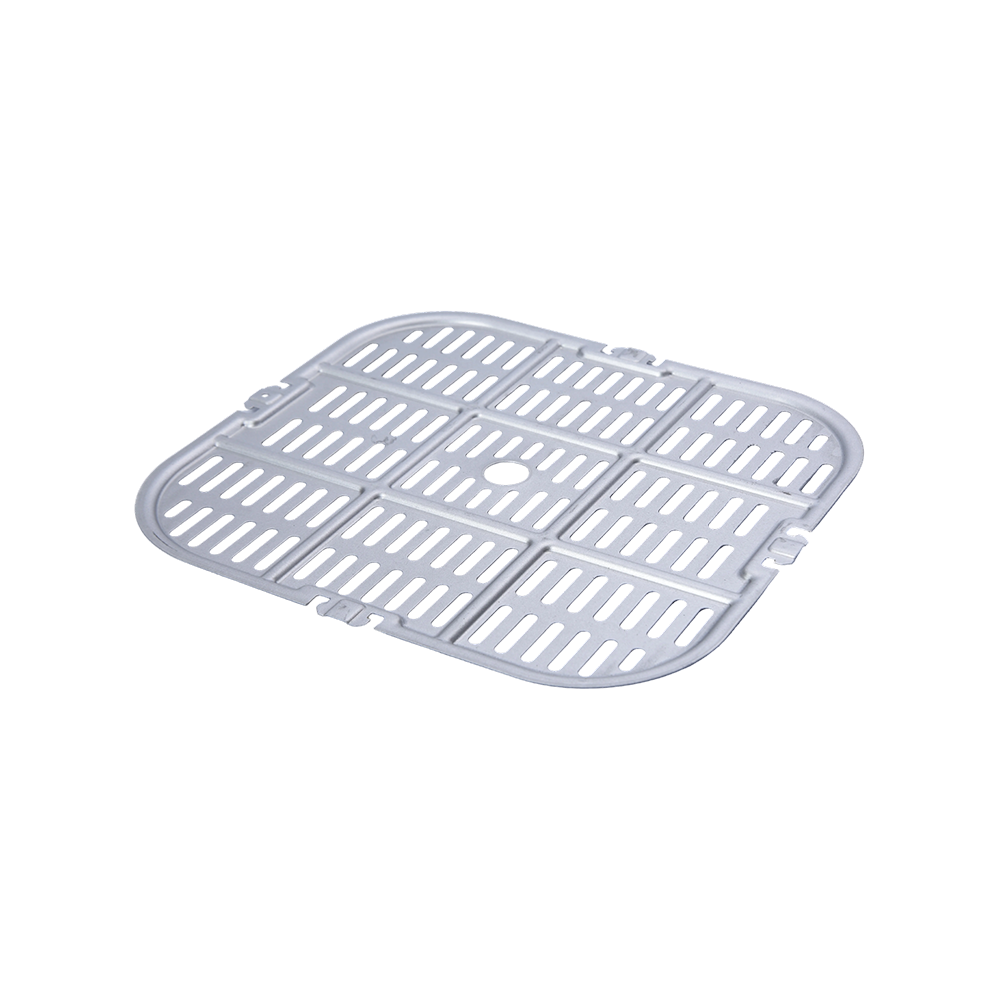 Air fryer baking trayThe Air Fryer Baking Tray is a high-quality accessory designed to enhance the versatility of your air fryer, allowing you to easily bake, grill, and cook a variety of ...View Product →
Ask the fabricator to show you how they inspect a similar part and what tolerances they guarantee. Also, ask about how they handle defects. A trustworthy fabricator will have a clear non-conformance procedure and be transparent about any issues that arise. Many buyers find it helpful to request a sample part or a pilot run before committing to full production. This not only verifies part quality but also gives you a sense of their communication and responsiveness.
Evaluate Communication, Quoting, and Sampling
The way a fabricator responds to your initial inquiry is often a preview of how they will handle your account. Do they ask clarifying questions about your requirements? Do they provide a detailed quote that breaks down material, tooling, and piece price? Vague quotes can lead to hidden costs later. Look for a partner who takes time to understand your drawing, tolerances, and delivery expectations.
A reliable quote should clearly include:
- Material specification and sourcing
- Tooling costs and lead times
- Piece price with volume breakdown
- Payment terms and delivery schedule
Sampling is also critical. Reputable fabricators usually offer prototypes or pre-production samples before mass production. During this stage, pay attention to how they handle design changes and feedback. A fabricator who treats sampling as a collaborative engineering process is more likely to be a long-term partner.
Visit the Factory or Arrange a Video Audit
If possible, visit the fabricator’s facility in person. A factory tour lets you see the cleanliness, organization, and general working atmosphere. Look for well-maintained equipment, clear process flows, and workers who follow safety procedures. If you are overseas or cannot travel, ask for a live video audit or a recorded factory walkthrough. Many experienced fabricators are used to hosting customer audits and will cooperate with your request.
During the visit, talk to the people who actually run the machines and oversee quality. Their attitude can tell you more than a glossy brochure. Ask about preventive maintenance, tool storage, and how they manage change orders. A transparent operation will welcome your questions.
- Cleanliness and organization
- Well-maintained machines
- Workers following safety procedures
- Clear process flow
Consider these points as part of your overall assessment. A factory that looks chaotic on the surface may still produce good parts, but the risk of inconsistency is higher.
Quick Reference Checklist
The following checklist summarizes the key criteria to evaluate when choosing a metal fabricator. Use it as a starting point for your own assessment.
| Area to Evaluate | Questions to Ask |
|---|---|
| Certifications | Do you have current ISO 9001 or relevant industry certifications? |
| Experience | Have you produced similar parts for my industry? |
| Equipment | Do you have the right presses and tooling in-house? |
| Quality control | What inspection procedures and first-article checks do you follow? |
| Communication | How quickly will you respond with a detailed quote? |
| Sampling | Can you provide a prototype or pre-production sample? |
| Factory audit | May we visit or request a video tour of your facility? |
Keep a record of the answers you receive and compare them side by side. A fabricator that answers clearly and confidently is usually more reliable than one that avoids the details.
Finding a reputable metal fabricator takes time, but the effort pays off in fewer surprises, better product quality, and a smoother supply chain. Start by checking certifications, then dig into industry experience, production capabilities, and quality control. Evaluate how they communicate and whether they are willing to provide samples. If possible, see the factory for yourself. As a manufacturer, we understand that trust is built on transparency and consistent results. If you are looking for a partner who treats your project with care, visit our website to learn more about our capabilities, or contact us to discuss your requirements.
We hope this guide helps you make a confident decision. Remember that the most reputable fabricator is the one who listens to your needs, communicates clearly, and delivers exactly what it promises.
Previous Post
How Can You Classify Steel? A Practical Guide for Metal Parts Manufacturing
Next Post
How Does Metal Stamping Work? A Complete Guide to the Stamping Process
News
-
-
Steel is the backbone of modern manufacturing, yet it is never a single, uniform material. When engineers and buyers ask, "How can you clas...
READ MORE -
Sheet metal bending is one of the most fundamental processes in metal fabrication. It turns a flat sheet of steel, aluminum, or copper into...
READ MORE -
Every time you slide a tray into an air fryer, bolt a bracket beneath a dashboard, or snap a cover onto an electrical enclosure, you are ho...
READ MORE
Get Fresh Updates Via Email
We promise we will never disclose your email address, and you can opt out at any time.
-
Quick Links
Home About Us Products Service News Contact Us -
Product list
Deep-drawn parts Stamped parts Bending parts Kitchen appliance accessories Automotive stamping parts -
About Us
Factory Honour FAQ -
News
Company News Industry News -
Contact Us
Address: South side of Shunke Road, Yangming Science and Technology Industrial Park, Yuyao City, Zhejiang Province, China Tel: +86-13905842349/+86-13738485724 Email: hongli@hl-stamping.com
Copyright © Yuyao Hongli Optoelectronics Co., Ltd. All Rights Reserved.
Custom Precision-Sheet/Sheet Metal Stamping Manufacturers
