


 English
 русский
 Español
 عربى


If you have ever asked yourself, “How do I find a reputable metal fabricator?” you are not alone. As a manufacturer with more than 20 years...
READ MORE

News
Home / News / Industry News / How Can You Classify Steel? A Practical Guide for Metal Parts Manufacturing
How Can You Classify Steel? A Practical Guide for Metal Parts Manufacturing
2026-09-28
Steel is the backbone of modern manufacturing, yet it is never a single, uniform material. When engineers and buyers ask, "How can you classify steel?" they are looking for a practical way to match the right grade to a component's function, budget, and forming process. In our twenty-plus years of producing stamped, bent, and deep drawn metal parts, we have learned that a solid grasp of steel classification makes every later decision easier. This guide covers the main industry frameworks and why each one matters.
Why Steel Classification Matters in Manufacturing
Steel classification is not an academic exercise. It affects cost, performance, and manufacturability. A mild steel that forms beautifully in a stamping press may lack the strength needed for a load-bearing automotive bracket. A high-alloy stainless steel may resist corrosion perfectly, yet crack during deep drawing if its composition is not carefully selected. Understanding steel categories helps you specify materials with confidence, communicate with suppliers, and maintain consistent quality across production runs.
- Cost control: higher alloy content and stricter processing increase material price.
- Mechanical performance: strength, hardness, toughness, and corrosion resistance depend on steel class.
- Formability: low-carbon and low-alloy steels bend, stretch, and draw more easily than high-carbon grades.
- Consistency: established classifications keep suppliers and factories aligned on chemistry and properties.
Classification by Chemical Composition
The most fundamental way to classify steel is by chemical composition. Although thousands of commercial grades exist, nearly all fall into four families: carbon steel, alloy steel, stainless steel, and tool steel.
| Family | Key alloying elements | Typical applications |
|---|---|---|
| Carbon steel | Iron with carbon up to about 2% | Structural frames, stampings, fasteners |
| Alloy steel | Chromium, nickel, molybdenum, vanadium | Gears, axles, high-strength components |
| Stainless steel | At least 10.5% chromium | Kitchen appliances, food equipment, medical instruments |
| Tool steel | Tungsten, molybdenum, cobalt, vanadium | Dies, molds, cutting tools |
Carbon steel dominates the stamping and deep drawing industry because it balances cost and formability. Alloy steels are chosen when higher strength or hardenability is required. Stainless steel brings corrosion resistance and a food-safe surface, so it appears often in kitchen appliance accessories such as air fryer trays. Tool steel, though rare in finished parts, is essential for the dies and molds that shape other materials. In short, composition defines what a steel can do — and what it should not attempt.
Classification by Carbon Content
Within the carbon steel family, carbon content is the single most important variable, controlling the balance between strength and ductility. It determines how steel behaves in stamping, bending, and deep drawing.
- Low-carbon steel (below 0.25% carbon), often called mild steel, is soft, ductile, and easy to form and weld. It is the default choice for deep drawn containers, stamped brackets, and appliance parts.
- Medium-carbon steel (0.25% to 0.60% carbon) offers higher strength and wear resistance but requires more forming force and careful tool design. It suits automotive mechanical parts and small machinery.
- High-carbon steel (0.60% to 1.00% carbon) is hard and strong, but difficult to form into complex shapes. It appears in springs, wire, and cutting edges.
- Ultra-high-carbon steel (above 1.00% carbon) is very hard and brittle, reserved for specialized tools and wear components.
If you need a seamless deep drawn housing that will not tear or wrinkle, a low-carbon grade almost always wins. If your component must resist indentation and wear, a hardened medium-carbon grade may be necessary even though it complicates forming.
Classification by Processing Method
Steel can also be classified by processing route, which heavily influences surface quality, dimensional accuracy, and mechanical properties. The most relevant categories for parts manufacturers are hot-rolled and cold-rolled steel.
Hot-rolled steel is formed above the recrystallization point, making it economical for thick sections and large shapes. It has a scaled, slightly rough surface and suits structural components and heavier stampings that do not need a fine finish.
Cold-rolled steel is further processed at room temperature, producing a smoother surface, tighter tolerances, and higher strength through work hardening. For visually demanding parts — kitchen appliance accessories, enclosures, and visible brackets — cold-rolled sheets are preferred because they paint and polish well.
Cold-drawn steel, pulled through a die, is another key category for bars and wires needing precise dimensions. The processing classification directly affects tool wear and final appearance, so it should never be overlooked.
Classification by Application
Another practical way to classify steel is by the job it performs. Structural steel supports buildings and bridges. Automotive steel includes high-strength low-alloy and advanced high-strength grades for weight reduction and crash safety. Kitchen appliance steel is often stainless or pre-coated carbon steel for food contact safety and easy cleaning. Tool and die steel is built for the heavy loads of forming other metals.
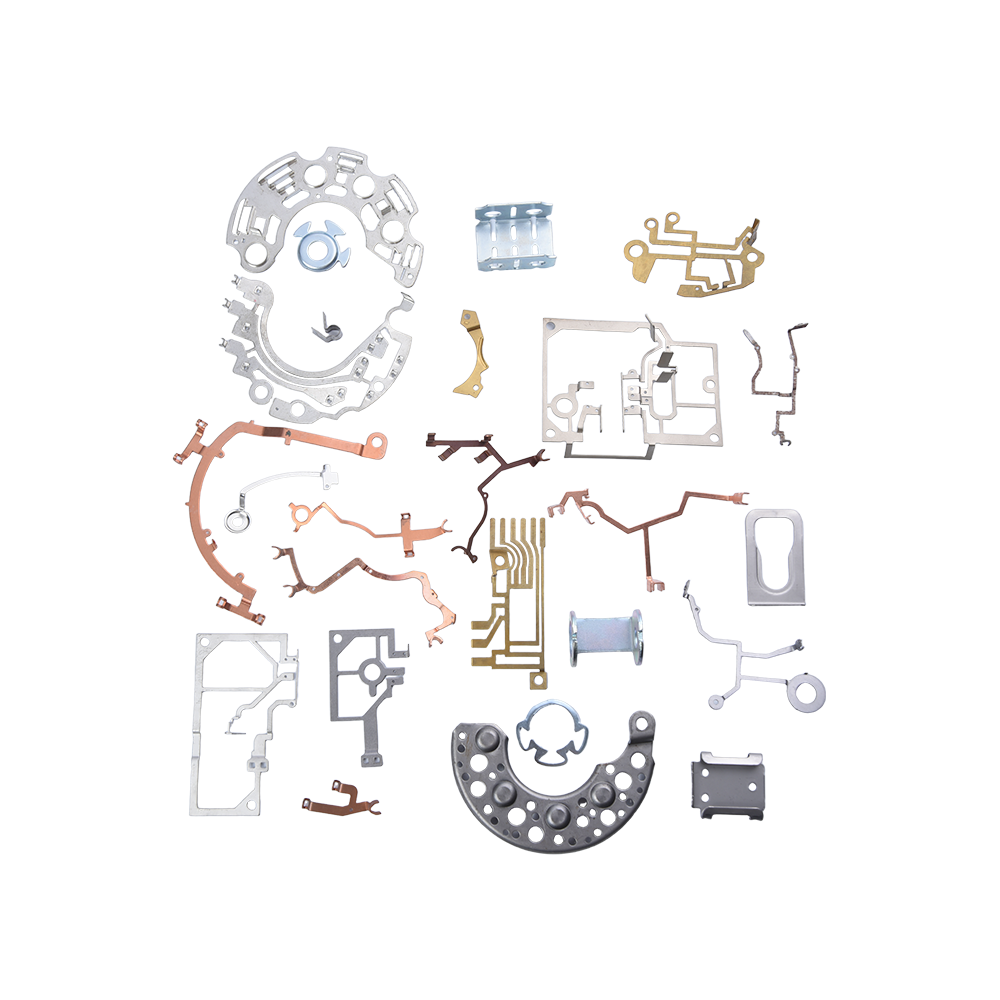 Stamped sheet metal parts for automotiveOur Stamped Sheet Metal Parts for Automotive are manufactured using precision stamping technology, ensuring high durability, corrosion resistance, and mechanical stren...View Product →
Application-based classification aligns closely with our production experience. When a customer asks for stamped sheet metal parts for automotive use, we think immediately about high-strength and ultra-low-carbon steels that survive the safety demands of a vehicle and the rigors of multistage stamping dies.
Classification by Product Form
Steel is also classified by physical form, which determines how it feeds into production. Coils and strips are the backbone of high-speed stamping. Sheets and plates become housings, frames, and enclosures. Bars, rods, and wires become shafts, springs, and fasteners. Tubes and pipes add rigidity or carry fluids.
For a stamping factory, form matters as much as chemistry. Coil width, thickness tolerance, surface finish, and edge condition affect press setup, tool life, and final consistency. Classifying by form also means planning the production route: what blank size is available, how many parts fit on a sheet, and whether the component will hold its shape after spring back.
How Steel Classification Guides Stamping and Deep Drawing
Understanding steel classification becomes especially valuable in deep drawing, where a flat sheet is forced into a die to create a seamless three-dimensional shell. Low-carbon steel with excellent elongation and a clean grain structure is the standard choice. Steels with too much carbon or too many inclusions tear at the die radius, while inconsistent gauge thickness causes wrinkling or uneven walls.
 Deep-drawn square containerThis deep-drawn square container is manufactured using advanced deep-drawing technology, ensuring a seamless, one-piece molding without any welded seams.View Product →
We have produced thousands of deep drawn components, from square containers with cutouts to rectangular boxes with handles or lids. Every one began with the right steel classification. The same applies to flat stampings and bent parts: a bendable strip, a precision-machined square, or an ultra-thin stamping each imposes its own material constraints.
 Stamped ultra-thin partsOur stamped ultra-thin parts are high-performance components designed for industries requiring lightweight, precision, and durable solutions. These parts are made from...View Product →
When the steel is classified correctly at the start, forming runs smoothly, die life improves, and the finished part meets dimensional and mechanical targets without excessive rework. That is the practical payoff of asking, "How can you classify steel?"
Final Thoughts
So, how can you classify steel? The answer depends on the job. You can classify steel by chemical composition, carbon content, processing route, intended application, or physical form. Experienced manufacturers use all of these systems together, cross-referencing chemistry with formability, cost, and end-use performance.
For OEM and ODM projects, the material conversation is never only about chemistry. It is about how steel behaves in a die, how it takes a finish, and how it performs in the field. If you are developing a stamped or deep drawn component and want a practical material recommendation, our engineering team is glad to help. You can also read our guide to stamped parts types, materials, and applications or explore our metal parts manufacturing capabilities to learn more about what we do.
Previous Post
How Is Sheet Metal Made? From Flat Steel Coil to Finished Stamped Parts
Next Post
How Do I Find a Reputable Metal Fabricator? A Practical Guide for Buyers
News
-
-
Sheet metal bending is one of the most fundamental processes in metal fabrication. It turns a flat sheet of steel, aluminum, or copper into...
READ MORE -
Metal stamping is the process of placing flat sheet metal—either in blank or coil form—into a stamping press, where a tool and die surface ...
READ MORE -
Bend allowance is one of those numbers that quietly determines whether a sheet metal part fits the first time or becomes rework on the shop...
READ MORE
Get Fresh Updates Via Email
We promise we will never disclose your email address, and you can opt out at any time.
-
Quick Links
Home About Us Products Service News Contact Us -
Product list
Deep-drawn parts Stamped parts Bending parts Kitchen appliance accessories Automotive stamping parts -
About Us
Factory Honour FAQ -
News
Company News Industry News -
Contact Us
Address: South side of Shunke Road, Yangming Science and Technology Industrial Park, Yuyao City, Zhejiang Province, China Tel: +86-13905842349/+86-13738485724 Email: hongli@hl-stamping.com
Copyright © Yuyao Hongli Optoelectronics Co., Ltd. All Rights Reserved.
Custom Precision-Sheet/Sheet Metal Stamping Manufacturers
