


 English
 русский
 Español
 عربى



Bend allowance is one of those numbers that quietly determines whether a sheet metal part fits the first time or becomes rework on the shop...
READ MORE

News
Home / News / Industry News / How to Bend Sheet Metal: A Complete Practical Guide for Precision Results
How to Bend Sheet Metal: A Complete Practical Guide for Precision Results
2026-10-22
Sheet metal bending is one of the most fundamental processes in metal fabrication. It turns a flat sheet of steel, aluminum, or copper into brackets, enclosures, and structural parts that hold assemblies together. Whether you are designing a new product or running a small fabrication shop, knowing how to bend sheet metal correctly saves time, material, and frustration. Get it wrong, and you will see cracked corners, inconsistent angles, and parts that refuse to fit. Get it right, and every component comes off the press brake ready for assembly.
Understanding the Fundamentals of Sheet Metal Bending
Bending works on a simple idea: a punch pushes the sheet into a die, and the metal takes a permanent shape along a straight line. In practice, though, several variables decide whether the result is a clean part or a scrapped one. Start with the basic terms.
Key Bending Terminology
- Bend line: the straight line along which the sheet is formed.
- Inside bend radius: the radius on the inner side of the bend, set by the punch tip and die opening.
- Bend allowance: the material length needed to make the bend; it defines the flat blank size.
- K-factor: the ratio that locates the neutral axis within the material thickness.
- Springback: the elastic recovery that opens the angle slightly after bending.
These values directly affect part dimensions. A small error in bend allowance, for instance, can leave a part several millimeters short of specification.
Material Behavior at a Glance
Different metals respond differently under the brake. Softer alloys bend easily with little springback; harder grades need more force and a larger radius.
| Material | Formability | Springback | Minimum Bend Radius* |
|---|---|---|---|
| Mild steel | Excellent | Low | 0.8-1.5 x thickness |
| Stainless steel | Good | High | 1.5-2.5 x thickness |
| Aluminum | Good | Medium | 1.0-2.0 x thickness |
| Copper | Excellent | Low | 0.8-1.5 x thickness |
| Brass | Excellent | Low | 0.8-1.5 x thickness |
*Typical starting values; confirm with supplier data for the specific alloy and temper.
What to Check Before You Start Bending
A clean bend does not happen by accident. Review these four factors before the punch touches the sheet.
Material Thickness and Minimum Bend Radius
Bending too tightly cracks the outer surface. Every material has a minimum bend radius, usually expressed as a multiple of sheet thickness. A safe starting point is one times the thickness for soft metals and up to two-and-a-half times for harder grades.
Grain Direction
Rolled sheet has a grain structure, much like wood. Bending parallel to the grain invites cracks along the bend line. Whenever possible, orient the bend across the grain, especially for tight radii and stainless steel.
Tooling and Die Opening
The punch tip sets the inside radius; the die opening controls the force required and how sharp the bend can be. A die opening of eight to ten times the material thickness is a dependable starting point for most jobs.
Surface Condition
Scratches, burrs, and mill scale become stress concentrators during forming. Keep blanks clean, deburr the edges, and apply a thin lubricant where the visible finish matters.
Common Bending Methods on a Press Brake
Three methods dominate sheet metal bending: air bending, bottoming, and coining. Each balances accuracy, tooling cost, and machine tonnage differently.
| Method | How It Works | Accuracy | Typical Use |
|---|---|---|---|
| Air bending | The punch forms the sheet without fully bottoming out; the angle depends on punch depth. | ±0.5° to ±1° | General fabrication, frequent setups |
| Bottoming | The sheet is pressed into the die bottom, imprinting the die angle on the part. | ±0.25° to ±0.5° | Production runs with consistent angles |
| Coining | The material is fully compressed between punch and die under high force. | ±0.1° to ±0.25° | High-precision parts, thin materials |
Air bending is the most popular because it needs moderate tonnage and lets the operator correct the angle by adjusting ram depth. Bottoming improves repeatability, while coining delivers the tightest tolerances but requires a heavier machine and sturdier tooling. Choose the method that matches the tolerance on your drawing and the capacity of your equipment.
 Precision-Bent Metal Part with Durable Fabric StrapThis accessory combines corrosion-resistant bending with a high-strength, non-slip strap, making it a practical choice for industrial and everyday uses.View Product →
Step-by-Step: How to Bend Sheet Metal
This sequence works for both one-off prototypes and production batches. The exact values change with your machine and material, but the logic stays the same.
- Verify the material and thickness. Measure with a caliper and confirm the grade. Check that the specified inside radius is achievable.
- Calculate the bend allowance. Use a bend allowance chart or formula to find the flat blank length, then mark the bend line.
- Select the punch and die. Match the punch radius to the required inside radius and choose a die opening about eight to ten times the material thickness.
- Set up the press brake. Adjust the stroke, back gauge, and ram position. Program the bend sequence if your machine supports it.
- Run a test bend on scrap. Use the same material and thickness. Measure the angle and adjust the stroke depth to compensate for springback.
- Position the workpiece. Align the bend line with the punch center and hold the part square against the back gauge.
- Make the bend. Bring the ram down smoothly. Avoid fast or jerky movements that shift the part or mark the surface.
- Inspect the result. Check the angle with a protractor, look for cracks or tool marks, and compare critical dimensions with the drawing.
The test-and-adjust loop matters most when you change materials or tooling. Many shops keep records of springback values and setups for each material, which turns future batches into quick changeovers.
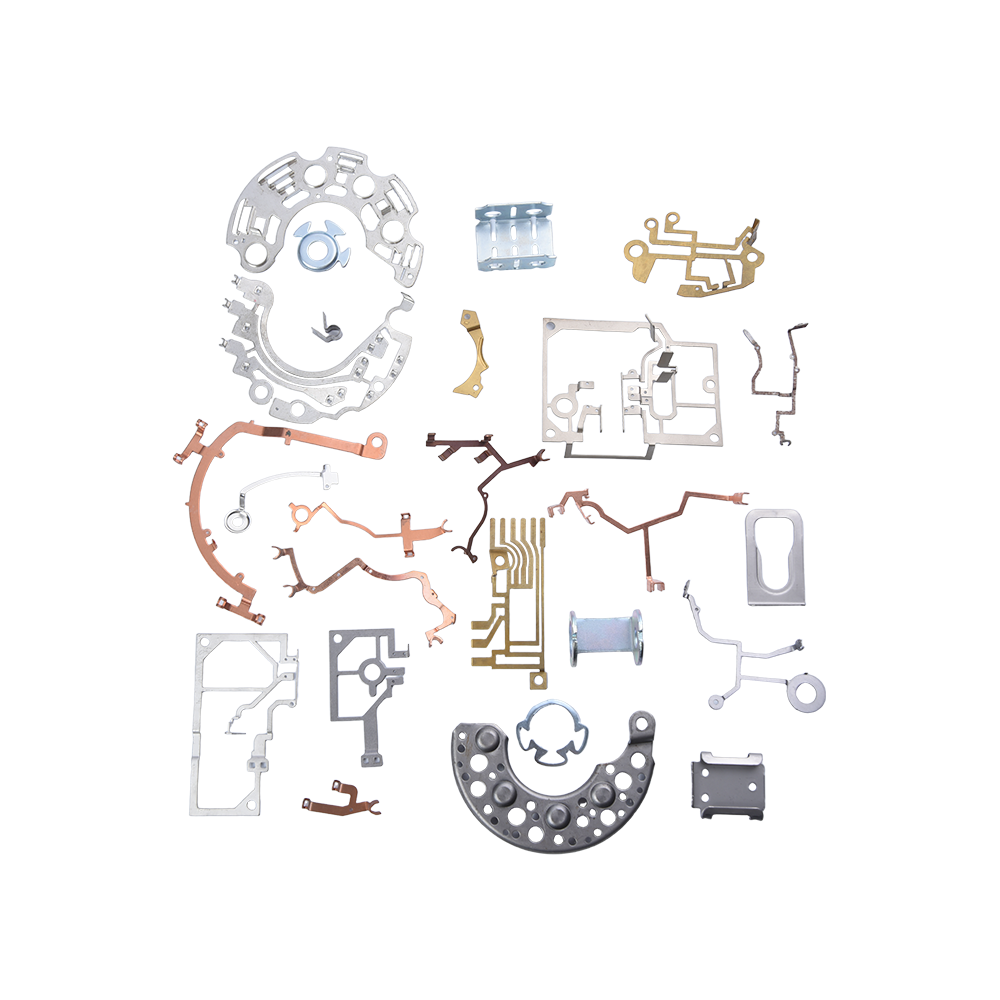
In production, bending is rarely a standalone step. Parts often move through cutting, stamping, and forming before they are finished. A stamped blank, for example, can include bendable features that let it be formed into its final shape without a separate blanking operation. That combination is common in brackets, connectors, and housings.
 Custom Bendable Stamped Strips for Compact FormingThese stamped strips offer flexibility and strength, allowing easy adaptation to structures while resisting rust and heat—ideal for brackets and housings.View Product →
Common Bending Mistakes and How to Avoid Them
Most bending defects are preventable once you know what to look for. These are the problems we see most often on shop floors.
- Ignoring springback. Metal always tries to return to its original shape. Over-bend slightly, or use a larger punch radius to reduce the effect.
- Bending parallel to the grain. This causes cracks on the outer surface. Reorient the layout so the bend line crosses the rolling direction.
- Using too small a bend radius. The outer surface tears when the radius falls below the material minimum. Increase the radius or switch to a more formable alloy.
- Choosing the wrong die opening. Too narrow a die raises tonnage and marks the part; too wide a die makes angles hard to control. Stick to the eight-to-ten times rule.
- Leaving burrs on the blank. Burrs create stress points and scratch the die. Deburr the edges before forming.
- Skipping the test bend. Material batches and tempers vary. A quick test on scrap can save an entire run from rejection.
When a Professional Fabrication Partner Makes Sense
Bending sheet metal well takes more than pressing a pedal. It takes proper tooling, a deep understanding of material behavior, and a disciplined process for holding tolerances across entire runs. For many companies, that is a reasonable capability to build in-house. For others, partnering with a manufacturer that does it daily is the smarter route.
At Yuyao Hongli Optoelectronic Co., Ltd., we have been forming metal parts for more than twenty years. Our 5,000-square-meter facility houses multiple stamping workshops, and we produce bending parts, deep-drawn components, and precision stamped pieces for automotive, kitchen appliance, and industrial customers. We support OEM and ODM projects with custom tooling, prototyping, and consistent quality control, so you can hand over the entire forming process with confidence.
When a part requires multiple operations, a single supplier keeps everything consistent. We routinely combine metal bending parts, stamping, deep drawing, and laser cutting metal parts to deliver complete components within tight dimensional limits. Fewer suppliers mean less coordination and shorter lead times.
Whether you need a prototype bracket or a high-volume run of formed parts, experienced hands make the difference between parts that look right and parts that fit perfectly. The fundamentals covered here are the same ones our team applies every day, backed by the machine capacity to handle complex geometries and demanding tolerances.
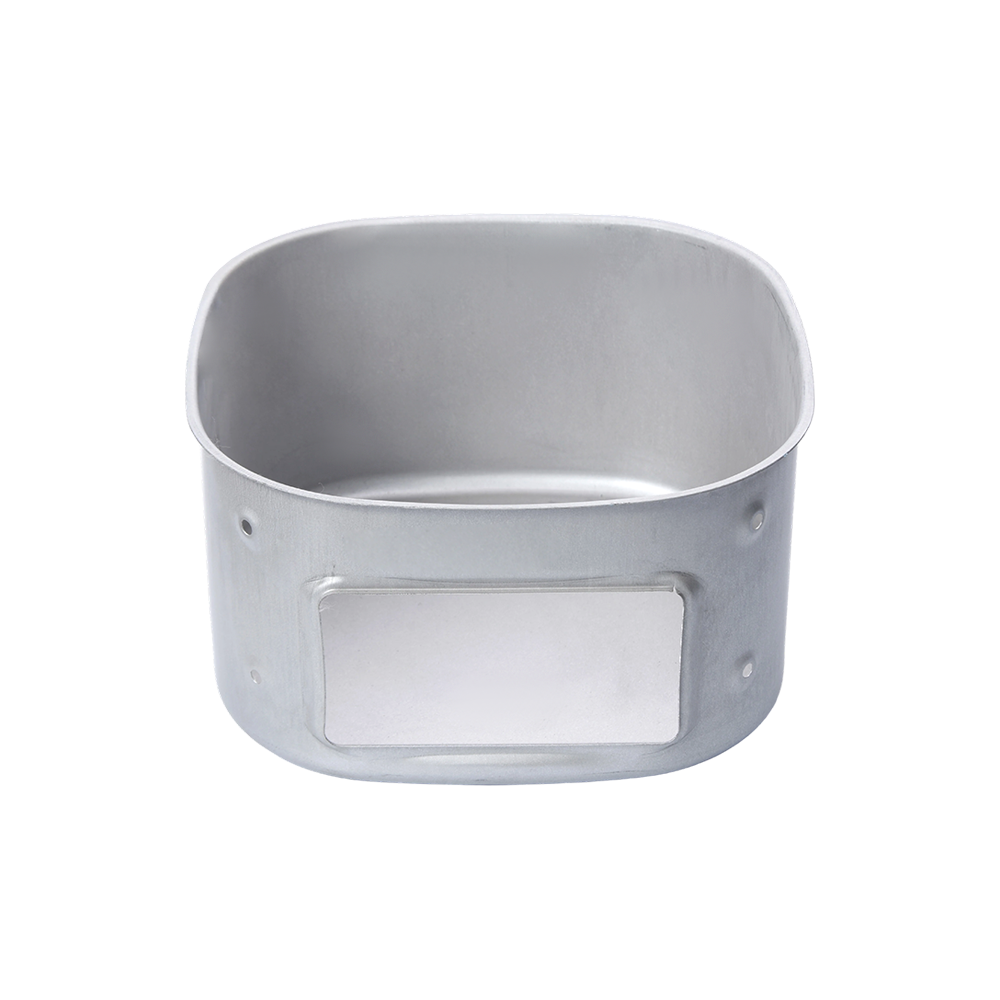
 Seamless Deep-Drawn Rectangular Container with HandleThis one-piece container uses advanced deep-drawing for strength and hygiene, with customizable sizes and finishes suitable for food, medical, or industrial use.View Product →
Previous Post
How to Calculate Bend Allowance: The Complete Guide for Sheet Metal Fabrication
Next Post
How Is Sheet Metal Made? From Flat Steel Coil to Finished Stamped Parts
News
-
-
If you have ever asked yourself, “How do I find a reputable metal fabricator?” you are not alone. As a manufacturer with more than 20 years...
READ MORE -
Every time you slide a tray into an air fryer, bolt a bracket beneath a dashboard, or snap a cover onto an electrical enclosure, you are ho...
READ MORE -
Steel is the backbone of modern manufacturing, yet it is never a single, uniform material. When engineers and buyers ask, "How can you clas...
READ MORE
Get Fresh Updates Via Email
We promise we will never disclose your email address, and you can opt out at any time.
-
Quick Links
Home About Us Products Service News Contact Us -
Product list
Deep-drawn parts Stamped parts Bending parts Kitchen appliance accessories Automotive stamping parts -
About Us
Factory Honour FAQ -
News
Company News Industry News -
Contact Us
Address: South side of Shunke Road, Yangming Science and Technology Industrial Park, Yuyao City, Zhejiang Province, China Tel: +86-13905842349/+86-13738485724 Email: hongli@hl-stamping.com
Copyright © Yuyao Hongli Optoelectronics Co., Ltd. All Rights Reserved.
Custom Precision-Sheet/Sheet Metal Stamping Manufacturers
