


 English
 русский
 Español
 عربى



Steel is the backbone of modern manufacturing, yet it is never a single, uniform material. When engineers and buyers ask, "How can you clas...
READ MORE

News
Home / News / Industry News / How Is Sheet Metal Made? From Flat Steel Coil to Finished Stamped Parts
How Is Sheet Metal Made? From Flat Steel Coil to Finished Stamped Parts
2026-10-14
Sheet metal is one of those materials that quietly holds everyday life together. The tray inside your air fryer, the bracket behind a car bumper, the chassis of a laptop, the panel on a household heater — every one of them began life as a flat sheet of steel or aluminium. So when someone asks how sheet metal is made, there are really two answers worth giving: how the flat sheet itself is produced at the mill, and how that sheet is later shaped into the parts people actually use. We have spent more than twenty years on the second half of that story, and here is how both halves fit together.
How a Flat Sheet of Metal Is Actually Made
A flat sheet of steel does not begin flat. It begins as a pool of molten metal, and everything that happens afterwards is about squeezing, cooling and rolling it into something uniform enough to be useful.
Melting and Casting
Recycled steel scrap and raw iron are melted in an electric arc furnace, and the melt is adjusted until carbon, manganese and any alloying elements sit inside a narrow target range. Aluminium and copper alloys follow the same logic in different furnaces. The molten metal is then poured into a continuous caster or a mould and allowed to solidify into a slab — a thick block that can be 200 mm or more deep.
Hot Rolling
The slab is reheated until it glows, then passed back and forth through a series of rollers that squeeze it thinner and longer with every pass. Because the metal stays above its recrystallisation temperature, the crystal structure keeps reforming and the material remains soft and workable. By the end of the line, that thick slab has become a coil only a few millimetres thick.
Cold Rolling and Annealing
When an application needs tighter thickness tolerance and a cleaner surface, the hot-rolled coil goes through a cold rolling mill at room temperature. Cold working hardens the metal, which is helpful later but inconvenient right now, so the coil is annealed — heated to a set temperature and cooled slowly — to bring the ductility back.
Coating, Slitting and Packing
Some coils are pickled and oiled, others are dipped in molten zinc to become galvanised sheet, and some are left bare for painting later. The wide master coil is then slit down to the widths a customer's press can handle, wound tight, and shipped with edge protection so the first metre of material is as good as the last.
How Sheet Metal Becomes a Finished Part
Once a coil reaches a fabricator, the goal is simple: turn a flat strip into a three-dimensional part that fits, holds and lasts. In practice that means a sequence of operations, and the order matters almost as much as the machines.
Cutting and Blanking
The outline of the part has to exist before anything else happens. Long runs usually go through a blanking die that punches the whole profile out of the strip in a single stroke, while prototypes and short runs are more likely to be laser cut, plasma cut or sheared. How the blank is laid out against the coil decides how much material is wasted, which is why nesting gets attention early in every project.
Punching and Perforating
Holes, slots, louvers and countersinks are normally added with punches rather than cut one at a time. In a progressive die, the strip advances through a series of stations, each adding one feature, until a finished part drops out at the far end. It is fast, repeatable and usually the cheapest option per part once the tooling exists. Our engineers put the whole sequence together in a step-by-step guide to how metal stamping works if you want the detail.
Bending
A press brake pushes the sheet down into a V-shaped die, creating a straight and controlled bend. The practical rule is that the inside bend radius should not be much smaller than the material thickness, or the outer surface will crack. Every metal also springs back slightly when the punch lifts, so tooling is set to over-bend by a calculated amount.
Deep Drawing
Deep drawing takes a flat blank and pulls it into a cup or a box using a punch and a die, letting the metal flow inward instead of simply stretching thin. Parts deeper than their own diameter often need several draws, with annealing in between to relieve the work hardening. A lidded rectangular container is a typical result: seamless walls, a flat base and a rim that accepts a cover cleanly.
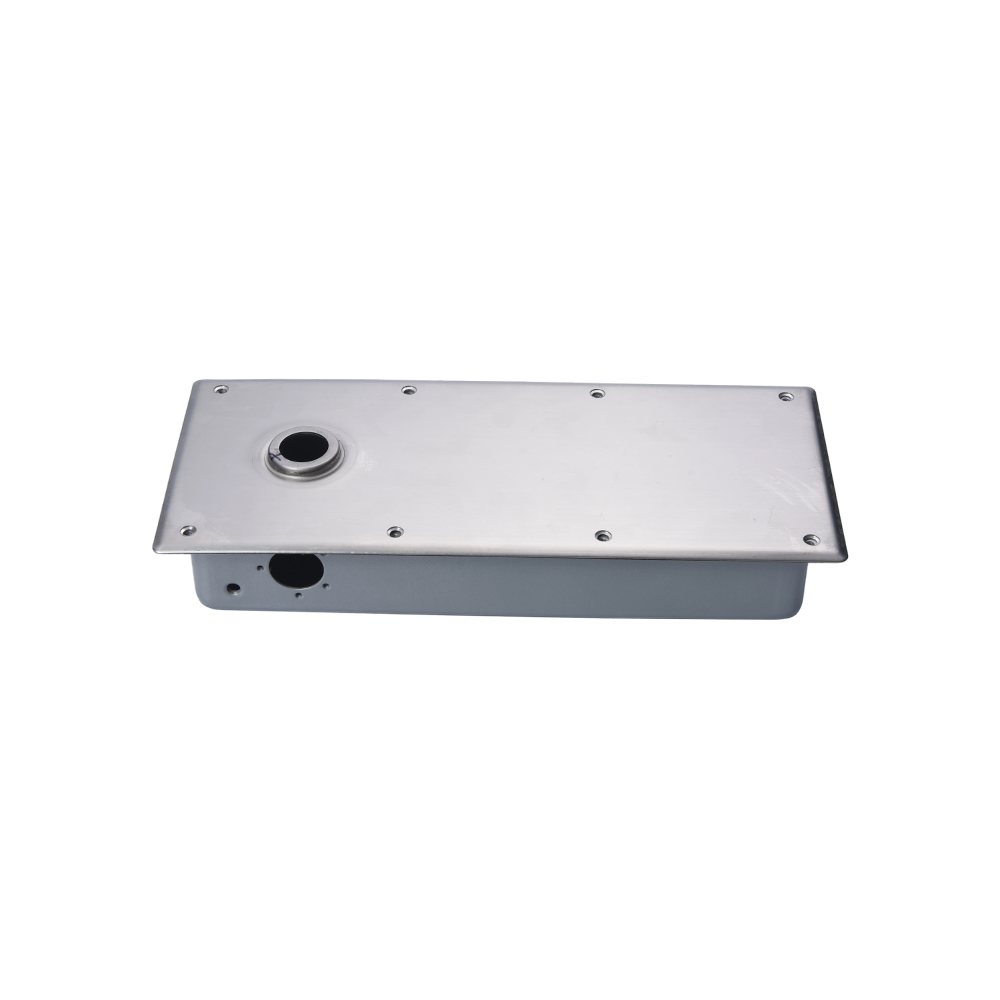 Deep-Drawn Rectangular Container with Fitting LidA seamless one-piece deep-drawn container with a secure fitting lid, suited to food processing, medical storage, and laboratory environments.View Product →
Joining and Assembly
Some parts are complete the moment they leave the press; most are not. Resistance spot welding, riveting, clinching, adhesive bonding and pressed-in hardware all happen at this stage, and the sequence is planned so that later operations never distort what was already aligned.
Finishing
Deburring comes first, because a sharp edge is both a safety issue and an assembly problem. After that, the part may be polished, powder coated, zinc plated, anodised or painted, depending on whether it needs corrosion resistance, electrical conductivity, or simply to look right inside a customer's finished product.
Which Process Fits Which Job
The right process is rarely a matter of opinion. It usually comes down to volume, geometry and the tolerance the assembly really needs.
| Process | How it works | Best suited to | Tooling cost |
|---|---|---|---|
| Blanking | A die punches the full outline in one stroke | High-volume flat parts | High |
| Laser cutting | A focused beam follows a programmed path | Prototypes and short runs | None |
| Punching | Punches add holes and slots as the strip advances | Repeating hole patterns | Moderate |
| Press brake bending | A punch presses the sheet into a V-die | Brackets, panels, chassis | Low |
| Deep drawing | A punch pulls a blank down into a die cavity | Cups, containers, housings | Higher |
| Progressive die stamping | Several stations run inside one press cycle | Complex parts in volume | Highest |
Why the Material Matters as Much as the Process
Two parts can share the same drawing and behave completely differently, because the alloy and temper often decide whether a bend cracks or a drawn wall tears. These are the materials we reach for most often:
- Cold rolled steel, such as SPCC, for general brackets, covers and housings that will be painted or plated.
- Galvanised steel, where corrosion resistance matters and the part will be used outdoors or in damp rooms.
- Stainless steel 304 or 430, for kitchens, instruments and equipment that needs to stay clean and rust free — a common choice for stainless steel stamping parts.
- Aluminium 1060 and 5052, when weight matters more than raw strength and the part needs to resist corrosion naturally.
- Copper, brass and phosphor bronze, when the part has to conduct electricity or heat and hold a tight tolerance.
Where Sheet Metal Parts End Up
Automotive work is the most demanding corner of the trade. A stamped body bracket or reinforcement has to hold its shape through years of vibration, temperature swings and road salt, which means tight tolerances, verified material certificates and a stamping process that repeats the same result on the ten-thousandth stroke as it did on the first.
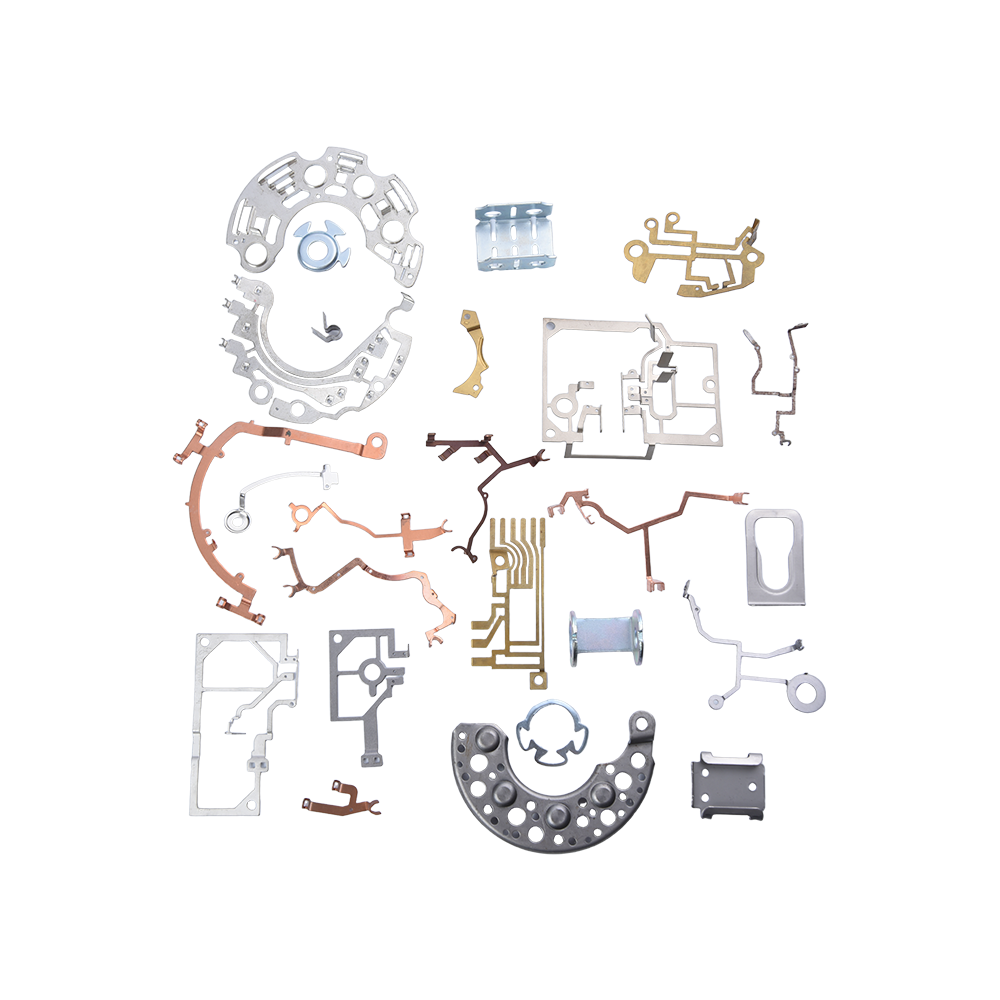
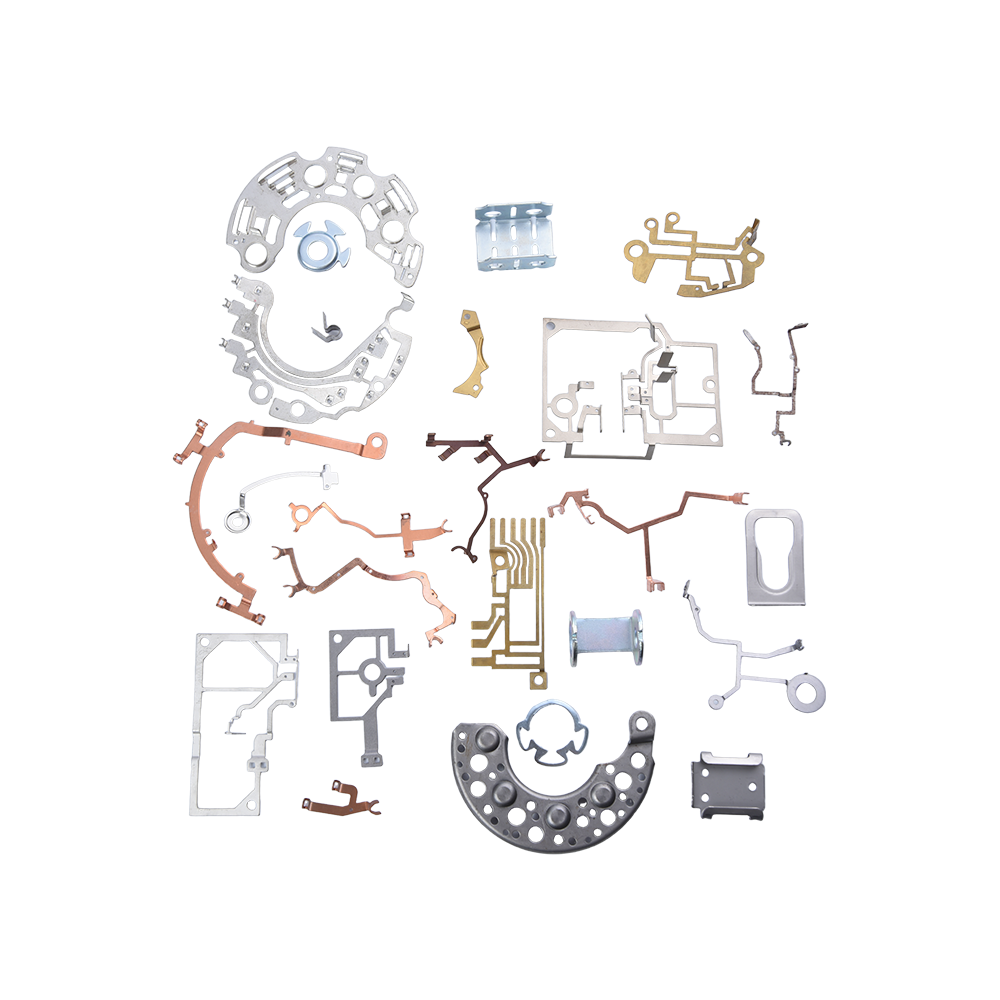 Precision Stamped Sheet Metal Parts for AutomotivePrecision-stamped automotive parts designed for durability and corrosion resistance, with customizable dimensions, shapes, and surface finishes such as polishing and electroplating.View Product →
Kitchen appliances are a gentler environment but an unforgiving one for appearance. Parts have to fit neatly, sit flat, resist steam and grease, and survive daily cleaning without rust spots or sharp edges appearing.
How We Approach Sheet Metal Work
We run a 5,000 square metre factory in Yuyao with several stamping workshops, and we have been making metal components since 2000. Most of what leaves our floor is custom work — a customer sends a drawing or a sample, we work through material and process choices together, build a prototype, and only then move into production. That OEM and ODM way of working suits everything from small precision parts to deeper drawn containers and appliance components, including kitchen accessories such as perforated containers and replacement trays.
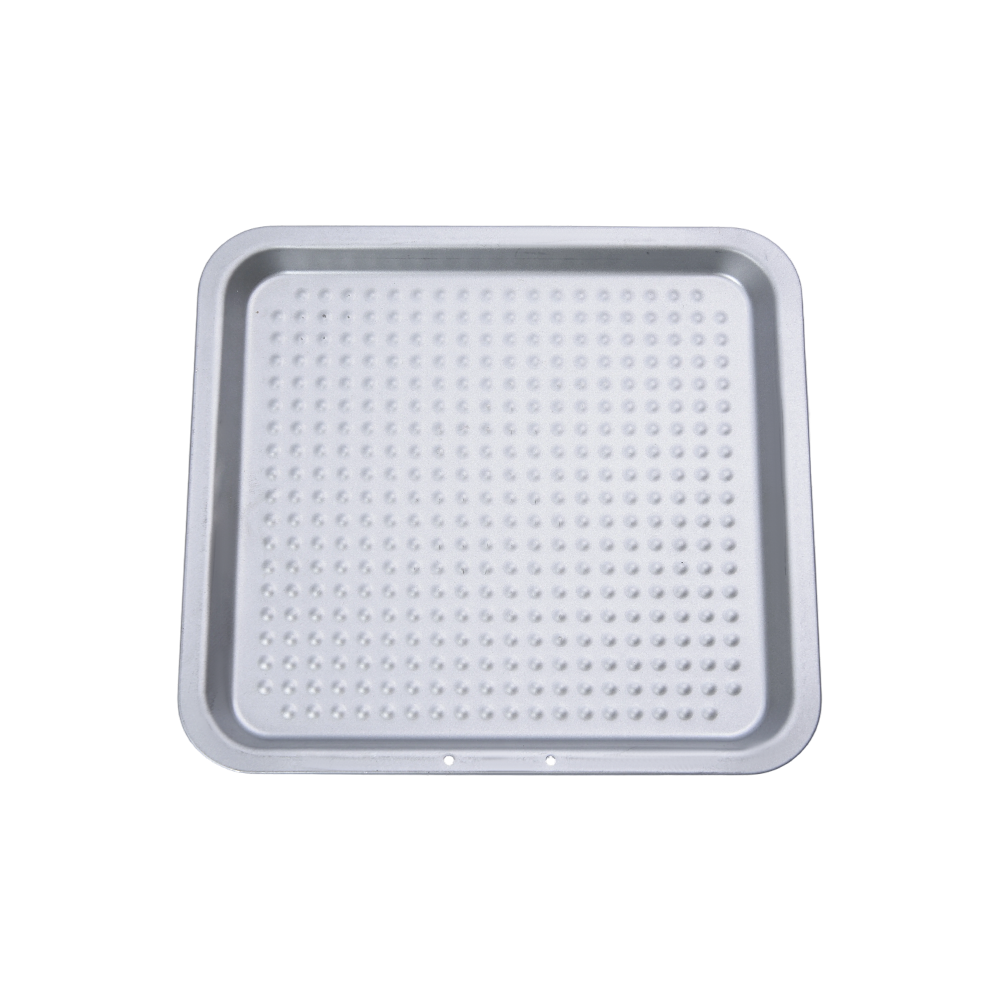
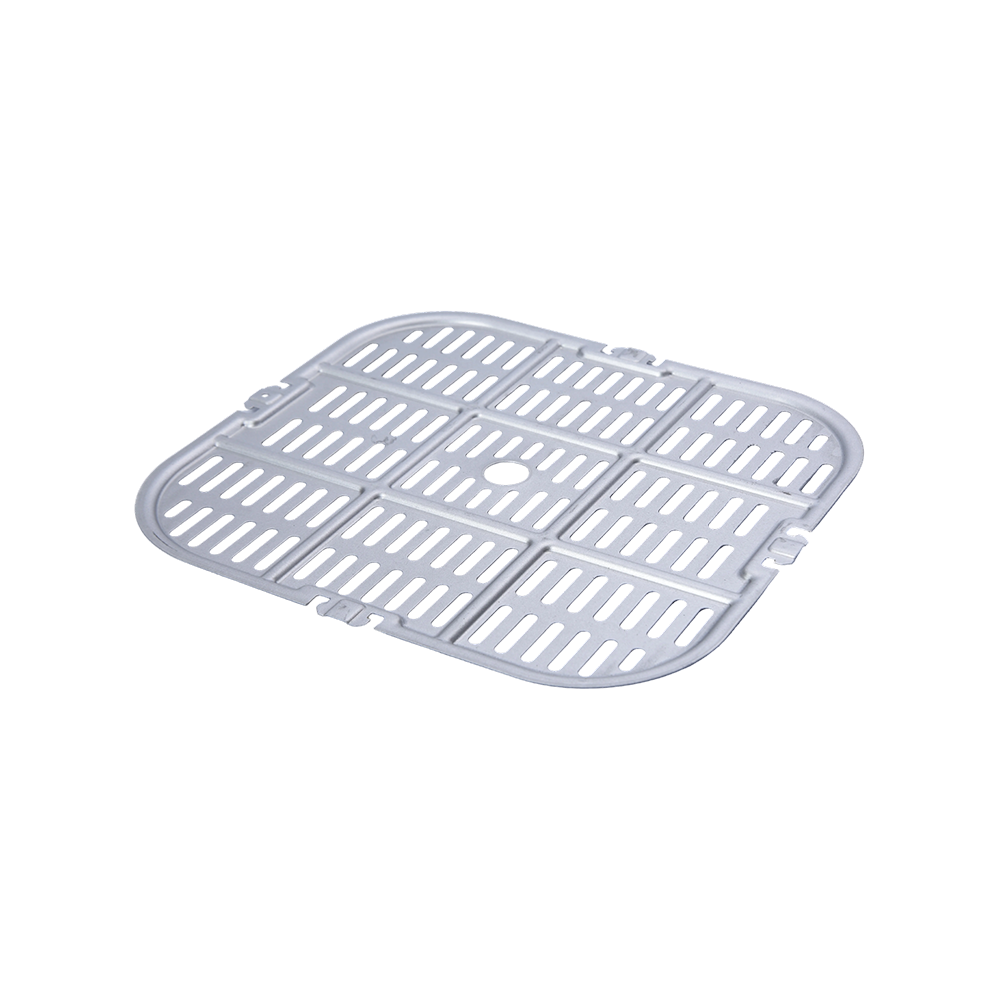 Air Fryer Baking Tray with Perforated SurfaceA kitchen appliance accessory with perforated or mesh surface for air circulation, helping bake, grill, and roast foods evenly and clean up easily.View Product →
What We Check Before Anything Ships
Good stamping is mostly about consistency, and consistency comes from checking at the right moments rather than only at the end:
- Incoming coil is verified for thickness, hardness and surface condition before it reaches a press.
- First article inspection confirms that tooling, bend allowances and hole positions match the drawing.
- In-process checks catch drift early, while parts are still on the machine rather than in a box.
- Burr height, flatness and edge quality are reviewed, since these decide how well parts assemble and how safe they are to handle.
- Tooling is maintained on a schedule, because a worn punch creates problems long before it fails completely.
- Dimensional reports and sample parts travel with the shipment so the receiving team knows what to expect.
So how is sheet metal made? It starts with melted metal, rolled down into a coil with a precise thickness and a predictable temper. Then it is cut, punched, bent, drawn, joined and finished until it becomes something you can hold and install. Neither half of that journey is glamorous, but getting both halves right is exactly what separates a part that simply fits from a part that lasts. If you have a drawing on your desk and you are not sure which route makes sense, that conversation is usually the most useful place to begin.
Previous Post
How to Bend Sheet Metal: A Complete Practical Guide for Precision Results
Next Post
How Can You Classify Steel? A Practical Guide for Metal Parts Manufacturing
News
-
-
Sheet metal bending is one of the most fundamental processes in metal fabrication. It turns a flat sheet of steel, aluminum, or copper into...
READ MORE -
Bend allowance is one of those numbers that quietly determines whether a sheet metal part fits the first time or becomes rework on the shop...
READ MORE -
Every time you slide a tray into an air fryer, bolt a bracket beneath a dashboard, or snap a cover onto an electrical enclosure, you are ho...
READ MORE
Get Fresh Updates Via Email
We promise we will never disclose your email address, and you can opt out at any time.
-
Quick Links
Home About Us Products Service News Contact Us -
Product list
Deep-drawn parts Stamped parts Bending parts Kitchen appliance accessories Automotive stamping parts -
About Us
Factory Honour FAQ -
News
Company News Industry News -
Contact Us
Address: South side of Shunke Road, Yangming Science and Technology Industrial Park, Yuyao City, Zhejiang Province, China Tel: +86-13905842349/+86-13738485724 Email: hongli@hl-stamping.com
Copyright © Yuyao Hongli Optoelectronics Co., Ltd. All Rights Reserved.
Custom Precision-Sheet/Sheet Metal Stamping Manufacturers
